
A recent class of deep-link vulnerabilities in mobile authenticator apps, including CVE-2026-26123 in Microsoft Authenticator, has rattled enterprise IT departments. The flaw is simple and devastating: a malicious app on a smartphone can hijack URI deep links to sniff MFA codes and session tokens.
The response from many corporate security teams? Ban Linux. Force everyone onto managed Windows environments.
This is often framed as a security decision, but in practice it optimizes for manageability rather than addressing the actual risk. In high-trust PKI environments, this problem was solved years ago, without touching anyone’s laptop OS.
The Mobile Weak Link#
The risk lives in how mobile operating systems handle URI deep links. It doesn’t matter whether you’re typing credentials on a locked-down Windows machine, a MacBook, or an Arch Linux build. If your second factor is a code delivered to a vulnerable app on a personal smartphone, the security chain is broken at that point. Not at the laptop.
Endpoint hardening still matters. EDR, patching, device compliance are all legitimate controls. But none of them mitigate this class of attack. Restricting the endpoint OS while leaving the mobile attack surface open is putting a bank vault door on a cardboard box. IT departments obsess over your kernel while the keys to production live on a device that mixes sensitive authentication with everything else a user runs. Mixed-use endpoints are the norm. The question is never what else is installed. It’s how access is protected regardless.
That’s not risk reduction. That’s optimizing for what’s auditable, not for what’s dangerous.
Professional Standards: Secure the Identity, Not the OS#
High-trust environments, specialized PKI units, critical infrastructure teams, operate on a different philosophy. They don’t secure the “type machine.” They secure the identity and the access.
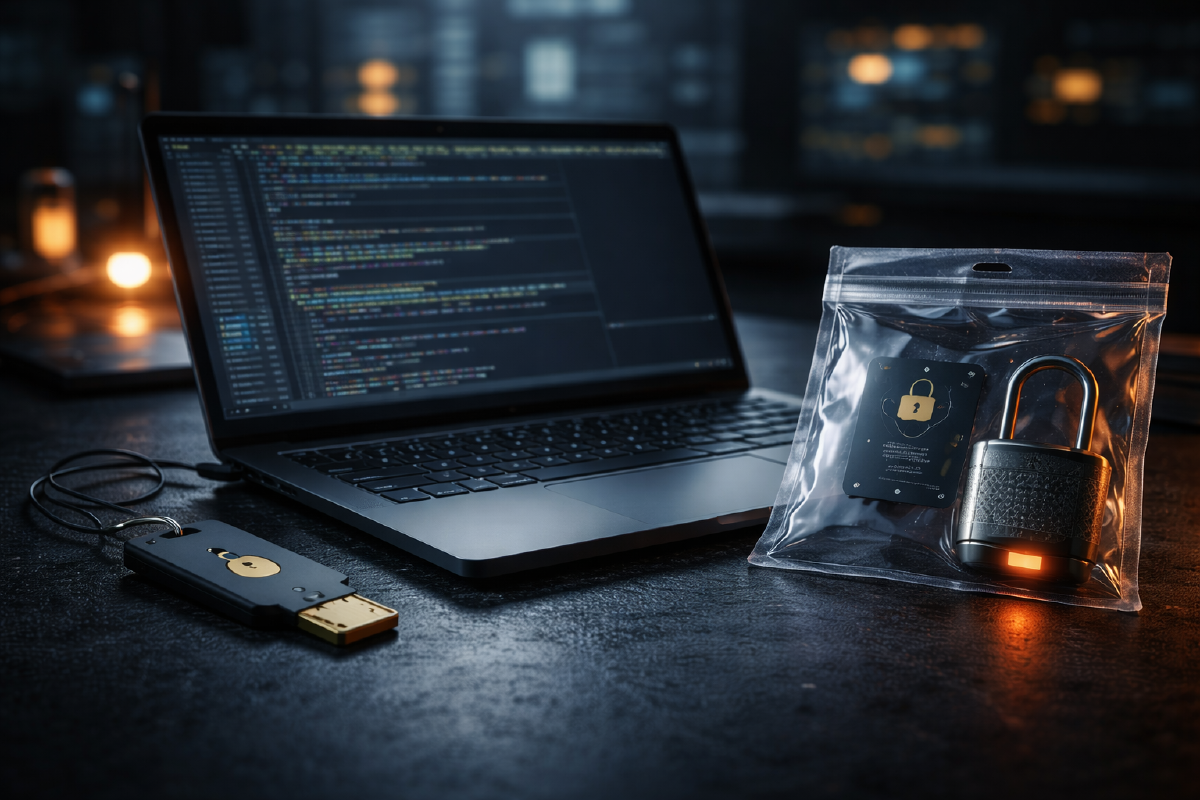
In a mature security model, the endpoint OS becomes secondary because trust is anchored in hardware and methodology. This starts with hardware tokens. FIDO2 devices like YubiKeys for all privileged accounts. A physical token is immune to the URI-hijacking that plagues mobile authenticators. It cannot be sniffed by a background process. It doesn’t care about deep links. It doesn’t live on a smartphone next to your banking app.
The Digital Sealbag: A Real-World Model That Works#
This isn’t theory. I’ve worked inside a PKI environment that runs this model, and it shows what separation of duties looks like in practice.
Each administrator has one personal hardware token. It’s theirs, it’s physical, it’s bound to their identity. A backup token for that same identity lives somewhere else: sealed in a physical bag, stored with a dedicated Key Management team. Not with the administrator. Not with IT ops. With a separate team whose sole function is custody of keys.
The Key Management team can access the backup keys, but has no access to the systems those keys protect, and holds no administrator passwords. The administrator has system access, but cannot reach their own backup token without going through Key Management.
Two teams. Two sets of capabilities. Zero overlap. This is separation of duties as it should work. No single person, no single compromised device, no malicious insider can cause systemic collapse. The knowledge, the key, and the proof of identity are held by three different parties in three different forms.
Just-In-Time Access: Kill the Static Password#
The other relic that needs to go is the static admin password. In modern environments, root and administrator accounts don’t carry permanent credentials. Credentials are stored in a secure vault: HashiCorp Vault, Bitwarden (self-hosted) or comparable enterprise platforms, and issued only via Just-In-Time (JIT) requests.
Access is time-limited. Every session is intentional and logged. When access expires, the window closes. This means that even if an attacker compromises an endpoint, any endpoint, Windows, Mac or Linux, they get no standing access to anything critical. The credential they found is already expired or was never stored on the machine to begin with. Combined with hardware-backed identity, the debate over which OS an admin uses becomes irrelevant.
Why This Keeps Happening#
Organizations default to what they can control. Endpoint standardization is visible, enforceable, auditable. You can point to it in a compliance report. Mobile risk is harder to quantify, harder to enforce, harder to explain to a board.
So instead of fixing the weakest link, they reinforce the most manageable one. It’s not malicious. It’s organizational gravity. The path of least resistance runs toward “everyone on Windows,” not toward “rethink your MFA architecture.” Auditable and secure are not the same thing.
The Productivity Tax#
Banning Linux and macOS in favor of a homogenized Windows environment doesn’t make your organization more secure. It makes your engineers less effective, more frustrated, more likely to find workarounds that introduce the exact shadow IT risks you claimed to be preventing.
A skilled engineer on a Linux machine with a YubiKey and JIT access is more secure than a standard user on a managed Windows machine authenticating with a vulnerable mobile app. The math isn’t complicated. The politics are.
The Bottom Line#
Security departments should be building resilient systems that assume the endpoint might be compromised. When you do that properly: hardware-backed identity, ephemeral credentials, enforced separation of duties. The OS debate evaporates.
The vulnerabilities that matter right now live in your pocket. Not on your engineers’ desks. Stop the theater. Secure the keys. Protect the identity. Let professionals use the tools they need to do their jobs.
Key Takeaways#
- The Attack Surface Is Mobile: URI deep-link vulnerabilities in authenticator apps compromise the entire MFA chain regardless of what OS the admin is running.
- Hardware Tokens Eliminate the Problem: FIDO2 tokens like YubiKeys cannot be sniffed. They are immune to the class of attack mobile authenticators are vulnerable to.
- Separation of Duties Is Structural: Key Management holds backup keys but has no system access. Admins have system access but cannot reach backup keys.
- JIT Access Kills Standing Credentials: Time-limited credentials mean a compromised endpoint yields nothing permanently useful.
- OS Bans Are Administrative Convenience: Homogenizing endpoints while leaving the mobile attack surface open doesn’t reduce risk. It increases shadow IT.
The model described here is drawn from direct operational experience in PKI and security engineering environments.